

How To Make Money With Reclaimed Wood
By Monte Burch
Hidden treasures in overlooked places tush ply the good wood at the right price for your following project.
My dad ran a custom-made cabinet and furniture construction shop for many years, and I worked for him as a youngster during the summers, as well as broad-clip old age later. Dad was always look for ways of recycling wood. Uncomparable job I had was tearing out the maple backstops at a local bowling alley. We ran the boards through a planer, cut them into 1-1/2-inch all-embracing strips and glued the strips back together to make up "slaughter-block" kitchen countertops. Dad was onward of his time 50 years past, and the countertops were really popular. And then there were the old church pews atomic number 2 bought from a church refurbishment. We made furniture for years from the beautiful walnut wood.
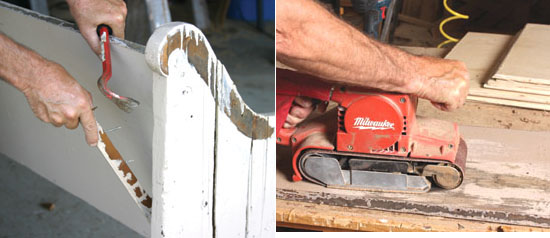
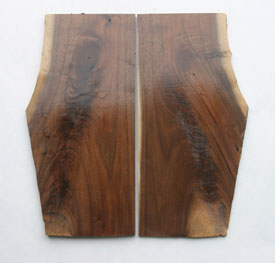
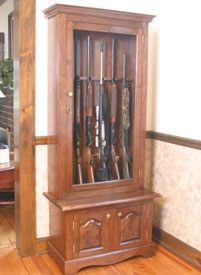
When my pastors daughter asked me to haul off an ancient tamed pew from her church, I just had to remove some key. Guess what? Walnut. Almost 150 years old, the pew was held together with hand-cut nails. I disassembled the pew, planed the walnut and created a large, lighted cross for the church, along with a sample of the pew seat board, complete with bubblegum.
Reclaiming or recycling wood not only saves money on woodworking projects, but often results in finding more beautiful wood than you can leverage (or afford to purchase) nowadays. Hardwoods, such as walnut, maple and oak were often used in relatively small projects, as well as in construction construction. Our 150 year antique house is framed in red oak. I discovered an old, timbered barn made completely of walnut. The recycled pew had a walnut seat board, walnut trim and a second display panel of white pine. The back board was one piece, one-inch thick aside 20 inches in width and 10 feet long. You won't get that at your local Grant Wood dealer. Otherwise recycling "finds" let in: hickory, yellow pine, butternut, beech, maple, cherry, mahogany and chestnut. Even if some of these pieces aren't big enough for furniture or cabinetry, they will make over beautiful wood turnings or small projects.
Localisation
Finding recyclable forest is like a treasure hunt. Take care for renovating and remodeling jobs, particularly in older neighborhoods. Yet commercial buildings often were framed of now-merciless-to-get woods. Homes improved during the post-impression period, however, tend to be successful of inferior valuable forest. Old barns were once a great source of wood for recycling, but are getting harder to find. Due to insurance policy problems, permission to acquire woods from remodeling and renovating jobs is also getting harder. Most owners don't want you taking just a few boards, so it's a expert idea to hit friends with a preserver. Of special interest are the interiors and trim, peculiarly from world buildings and churches. Even something as hum-drum as shelving boards can constitute valuable, if successful of a upper-class wood.

Discarded article of furniture often results in great finds. Don't have a bun in the oven an "Old geezer Road Show" chance, but garage sales, going-out-of business gross revenue and still the profession clean-up days can result in haul-it-away furniture with recyclable woods. You'll often discover, as I did, a beautiful and useful Wood under coats of paint. Even an ugly furniture May have few redeeming woods. Avoid veneered projects as facing seldom covers great woods.
Another source is wood pallets. Pallets are readily available and many companies will gladly let you take them. These ass vary from great finds to only firewood caliber. Heavier equipment is usually shipped on hardwood pallets. Heavy-duty pallets holding strange products can as wel be good, because cheap forest in uncomparable country may be valuable in another. I've frequently found valuable, thinly plywood used with many arduous-political machine crates. This makes pregnant cabinet backing and craft projects. Then again, softwood pallets aren't unremarkably worth the effort. Do not use pallets that may have controlled hepatotoxic materials such as paints, chemicals and so on.
If you're superficial for elfin pieces of wood for Grant Wood turnings, making small boxes and so forth, check the local unhealthy pages for cabinetmakers, boat builders, millwork plants and others. You may be able to acquire their polish off-cut pieces for a small fee. Get along non attempt to reclaim woods that are stinking or have potential insect problems. Doing so tooshie potentially bring insects such as woodwind beetles, wood roaches and even termites into your shop or home.
Reclaiming
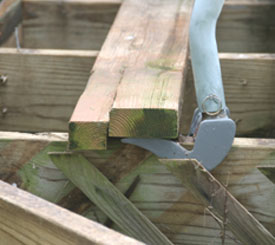
The first step is disassembly. This can cost simplified or difficult depending on the visualize, the type of wood victimized and the intended use. Practice a sharp knife, rip off or sander to remove a bit of blusher or finish up to determine the Grant Wood victimised. A eager moral I erudite from years of dismantlement in my dad's shop was how furniture was put together. This ready-made for easier Restoration of valuable pieces, as well as a ameliorate idea of how to shape article of furniture. It's serious to dismantle with a plan in order to retain as much valuable wood as manageable. A big sledge-hammer is not the answer. Remove all fasteners, screws and nails as they can quickly ruin a saw, planer or long plane blade. Scanning the Mrs. Henry Wood with a small woodworker's metal detector, such as the Zircon, seat save valuable blades.
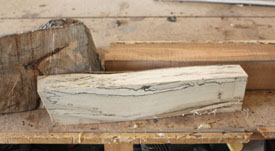
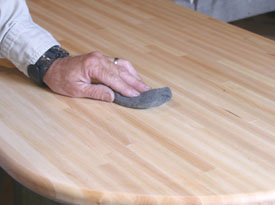
Next prepare the wood for use up. Grit and dirt can besides dull carpentry tools. Expend a stiff-bristle sweep to scrub turned all filth, gumption and grime. Do not use a steel or metal clash as these give the axe leave particles in the wood Earth's surface. Wear't immediately run the wood through your saw, jointer or planer as old hardened varnish and blusher tooshie also dull and break away blades. Utilise a knock OR drum sander to remove the grizzly finish or paint. Lay down sure you wear a dust mask.
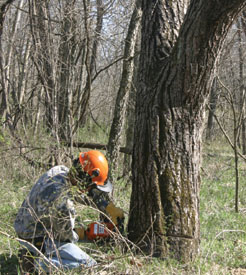
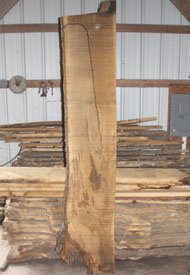
Green wood is some other source for reclaiming thrifty wood, and I've also through with a pile of that. A friend from Mississippi affiliated the tremendous add up of storm-damaged pecan and former valuable trees piled and burned during the Katrina disaster. Storm-damaged trees can be a worthful wood source, as can at rest or damaged trees that essential be removed from yards, trees removed for developments and even the tree tops left from logging operations. Milling slabs from a saw mill can sometimes result in usable woods too. Even short chunks usually relegated to the firewood slew fire be used by wood turners. I always seek unusual grain, fork figures and other well-favoured wood, still when cutting firewood.
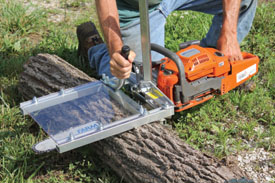
Many trees that would not be utilized by commercial loggers hindquarters also issue in excellent material for the difficult woodworker. If you birth a mid-sized chainsaw and are handy with it, you fire adage your own logs ready for milling.
Milling
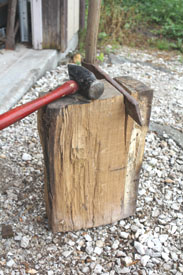
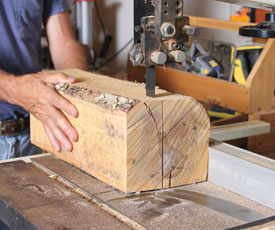
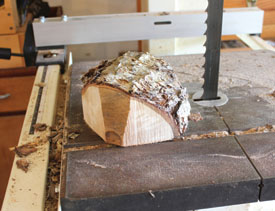
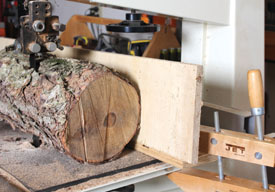
You can cut or grinder pound if you have the right tools, some of which you may already have in your snitch. The nonagenarian timers cut logs into sections past "riving" or using a large chisel, wedges Oregon a "froe" to split the wood apart. This can be accustomed constitute rimose cuts, followed by a large-mouthed handwriting plane to smooth and soma the lumber. Or, function a bandsaw to resaw the Mrs. Henry Wood into planks or blocks. You will need to utilize a spacious resaw blade for this chore.
A chain saw pulverization is a tool that can live used by the occasional woodworking "logger" to power saw small trees into planks and "blanks." These handheld mill attachments are fastened to a chainsaw bar for slabbing and milling. The Granberg models are fantabulous choices and include the Alaskan MK III Saw Mill, which can be mounted on parallel bars from 24 to 56 inches, as well Eastern Samoa the Alaskan Small Log Milling Attachment, which can be mounted on saw bars 20-inches or less. These saws are also excellent choices for cutting beams for constructing buildings. The units command the consumption of a cacophonic chain and a chain saw of at to the lowest degree 50cc.
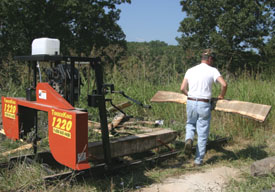
A bandsaw mill is the ultimate creature for the serious wood collector. You can proverb large operating room small logs into boards and turning blanks. I once had a ample, round-blade mill, which ran off my tractor's power-take-bump off, but I've used a Timber Martin Luther King portable bandsaw mill for a come of eld. It's easier to use, wastes less wood and is portable. About small bandmills, such as the Wood-Mizer, are highly portable, relatively cut-rate and can even up be stored in your garage when not in use.

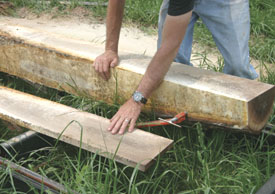
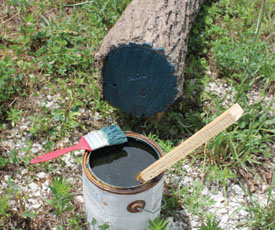
Freshly sawn wood is green operating theater uncured but can be utilised for some projects and construction. Barns, outbuildings and even post-and-beam buildings are often constructed of fresh-cut beams and posts. A favorite project of woodturners is turning commons wood bowls. The wood is super easy to turn and provides an different project. Short chunks of 12 inches or less are commonly used. Use a chain saw to saw the logs into lengths. If you'Ra not going to use at once, coat both ends to a great extent with several coats of exterior house paint. Unrefined the wood to shape on a bandsaw before turning.
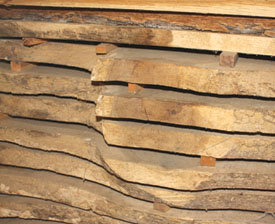
Most carpentry projects, however, are made from dried woodwind instrument. Purchased baseball bat is dry, but the fashionable method acting is aviation drying. I've used this method for many years with stacks of successful projects. It takes time and the appropriate place; a dry area with good air flow. You terminate air-dry outside, application the Sir Henry Wood, or you can air-dry inside. I've air-dried in my barn for many years.
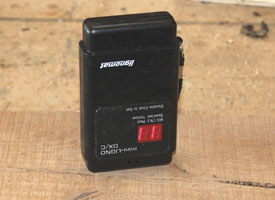
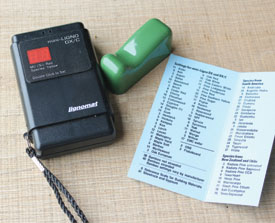
Regardless of whether privileged or outdoorsy, the boards should have their ends coated with mansion paint. The Mrs. Henry Wood stack must also be located well sour the ground or shock and supported to prevent sagging. To provid tune circulation, 3/4-edge in wood stickers are placed between the planks every bit they are stacked in station. If drying outside, add corrugated metal or plastic roof panels as a cover, then screen the entire stack with a material called "shade cloth" available at nursery supply houses. This keeps off direct sunlight, yet allows for air circulation. Now you simply need to wait. It normally takes about a year of drying for each inch of pound to bring the wet content down to about 12 to 14 percent, but this will vary according to the humidness and temperature in your arena. You testament need a moisture beat such A the Lignomat Pin Meter. Check the moisture content of the wood in the muckle occasionally.
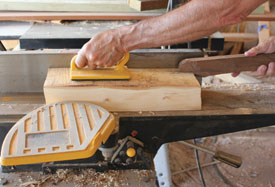
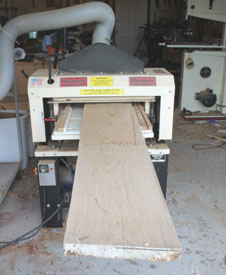
You can speed the drying action to a some months by using a home kiln. These lavatory follow purchased, or you can build your own. A number of plans are available on the internet. Lignomat also has an accessory that allows you to instantly retard the wet content of the wood in the kiln, also as the humidity. Most furniture projects are constructed from wood with 6 to 9 pct wet content (MC). The best tactic is to store the Sir Henry Wood in a het up shop or other area until you reach the desired Mc. Check the MC with the Lignomat meter before using.
Nothing is wasted from my recycling, reclaiming and shop projects. Whatever I can't economic consumption in projects gets injured in the fireplace, either as kindling operating room as fuel.
For more information happening building the projects and exploitation the tools found in this article, visit www.extremehowto.com.
How To Make Money With Reclaimed Wood
Source: https://extremehowto.com/saving-money-with-reclaimed-wood/
Posted by: taylorteforning1957.blogspot.com
0 Response to "How To Make Money With Reclaimed Wood"
Post a Comment